
Stevia
BASICS FOR YOUR HOME
Kid-Friendly: Yes
Pet-Friendly: Yes
Indoors: Bright window; grows well indoors with good light
Container Outdoors: Yes
In-Ground: Zones 8–11; tender perennial grown as annual in colder zones
Light: Full Sun to Part Shade
Temperature: Above 50°F; frost-sensitive
Water: Moderate
CARE INSTRUCTIONS
LIGHT: Stevia prefers full sun but tolerates partial shade, especially in hot climates. At least 6 hours of direct light is ideal. Indoors, a bright south-facing window or grow light keeps it productive.
WATER: Water when the top inch of soil is dry. Stevia likes consistent moisture more than most herbs but still requires excellent drainage. Avoid letting it dry out completely — it wilts quickly and loses quality.
SOIL & POT: Use a well-draining, fertile potting mix. Stevia is a moderate feeder and benefits from a balanced liquid fertilizer monthly during the growing season.
SEASONAL TIPS: Pinch stem tips regularly to keep the plant bushy and delay flowering. Once stevia flowers, the sweetness of the leaves decreases. Bring cuttings indoors before the first frost to overwinter as a houseplant.
HOW TO HARVEST
• Harvest stem tips regularly once the plant is 6–8 inches tall
• Snip just above a leaf node to encourage branching
• Harvest before or in the early stages of flowering for the sweetest leaves
• Harvest in the morning for the most concentrated sweetener content
• Fresh leaves can be used immediately; stems and leaves can be dried for storage
HOW TO USE
Stevia leaves are naturally sweet — 30–40 times sweeter than sugar — with a clean sweetness and a slight herbal, sometimes licorice-like aftertaste. It is a zero-calorie natural sweetener that can be used fresh or dried.
Fresh
• Add 1–2 fresh leaves to a cup of tea or herbal infusion and steep together
• Muddle into lemonade, sparkling water, or cocktails for natural sweetening
• Blend into smoothies as a natural sweetener
• Chew a single fresh leaf as a sweet, refreshing snack
Dried
• Dry leaves on a screen in a warm, airy spot until completely dry and crisp
• Crumble dried leaves into fine flakes and use as a sprinkling sweetener
• Steep dried leaves in hot water to make a concentrated liquid sweetener — store in the refrigerator for up to 2 weeks
Extracted / Powdered
• Blend thoroughly dried leaves into a fine powder using a spice grinder
• Use as a direct sugar substitute in baking (note: stevia does not caramelize or provide bulk like sugar — adjust recipes accordingly)
Tips
• A little goes a very long way — start with one or two leaves and adjust to taste.
• The sweetness is most pure in fresh leaves; dried leaves have a slightly more intense aftertaste.
• Pairs beautifully with mint, lemon, ginger, and chamomile in teas and drinks.
• For baking, stevia works best in recipes that don’t rely on sugar for structure or browning.
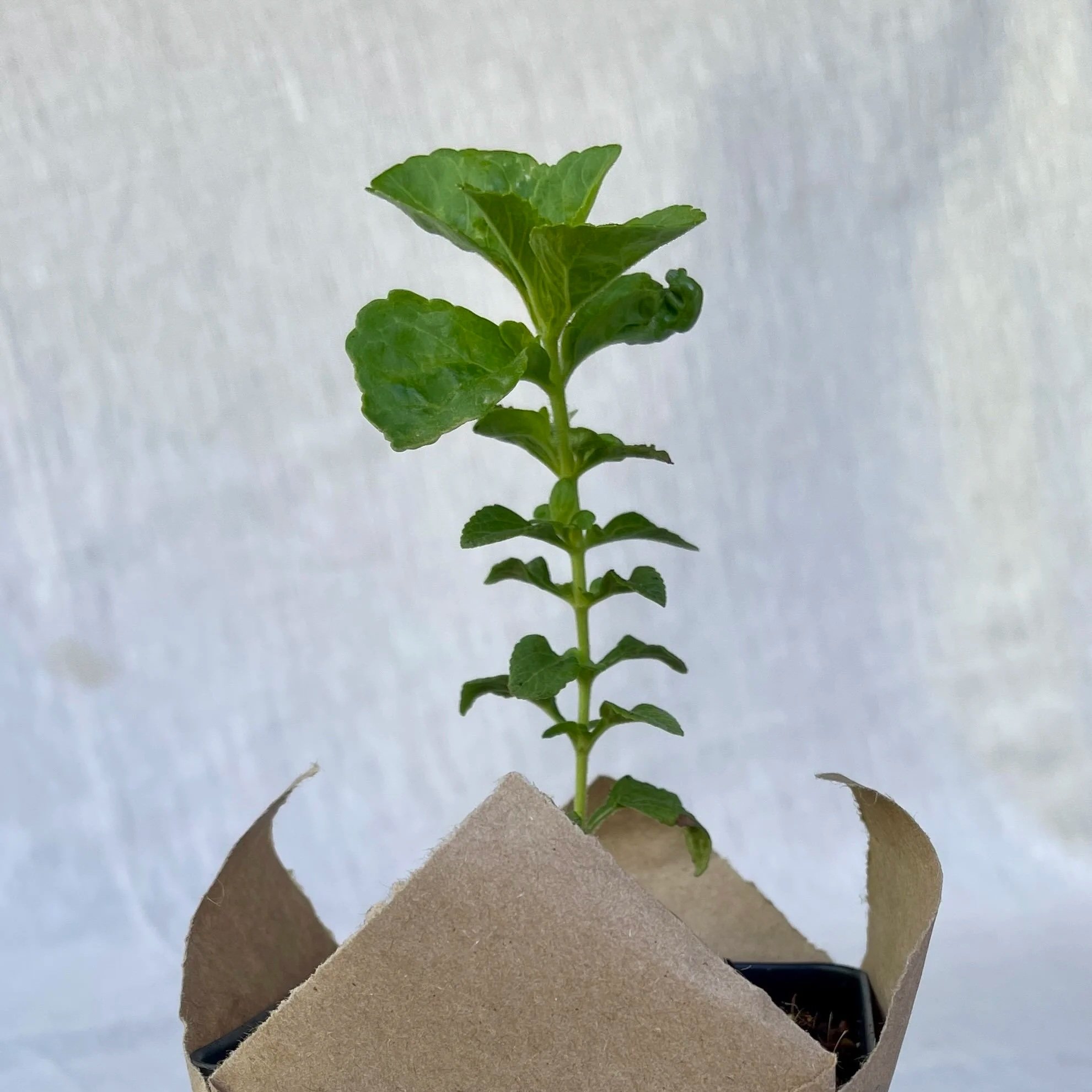
HOW THIS PLANT GROWS Stevia grows as a compact, branching annual with small, serrated, lance-shaped leaves. It produces tiny white flowers in late summer. Plants stay relatively compact — typically 12–24 inches tall in containers.
GROW JOYFULLY Stevia is a small plant with a remarkable gift. Grow it, taste a leaf, and marvel at nature’s ingenuity. Use it to sweeten your mornings without compromise.