
Thai Basil
BASICS FOR YOUR HOME
Kid-Friendly: Yes
Pet-Friendly: Yes (mildly; large quantities not recommended)
Indoors: Bright window; needs warmth and good air circulation
Container Outdoors: Yes
In-Ground: After last frost; warm soil essential
Light: Full Sun
Temperature: Above 50°F; frost-sensitive
Water: Moderate
CARE INSTRUCTIONS
LIGHT: Thai basil needs full sun — at least 6–8 hours daily. It is more heat-tolerant than Italian basil and actually performs better in the height of summer heat. Indoors, provide the brightest window or grow light available.
WATER: Water when the top inch of soil is dry. Keep consistently moist but never waterlogged. Thai basil is slightly more drought-tolerant than Genovese basil but still needs regular watering in hot weather.
SOIL & POT: Well-draining, fertile potting mix works best. Thai basil is a vigorous grower that benefits from monthly feeding during the growing season. Ensure excellent pot drainage.
SEASONAL TIPS: Thai basil is more bolt-resistant than Italian varieties — it tolerates summer heat better and stays productive longer. Pinch flowers to extend leaf harvest, or let it flower for a beautiful display. Bring cuttings indoors before the first frost.
HOW TO HARVEST
• Pinch stems just above a pair of leaves to encourage branching
• Harvest regularly throughout the season
• Both leaves and flowers are edible
• Remove flower spikes to prolong leaf harvest, or harvest the flowers for garnishing
• Thai basil holds up slightly better to brief cooking than Italian basil
HOW TO USE
Thai basil has an assertive, spicy-sweet flavor with pronounced clove and anise notes — it is distinctly different from Italian basil and not interchangeable in Southeast Asian recipes where it is called for specifically.
Fresh
• Add whole leaves to Thai curries (red, green, panang) at the end of cooking
• Tear into pho, Vietnamese noodle dishes, and rice bowls
• Add to pad see ew, pad kee mao (drunken noodles), and stir-fries
• Toss into fresh summer rolls or Vietnamese salads
• Garnish mango sticky rice and tropical desserts
Cooked
• Add whole leaves to stir-fries in the last 30 seconds of cooking
• Wilt briefly into curries and coconut milk–based sauces
• Fry whole leaves in hot oil for a crispy herbal garnish
Infused
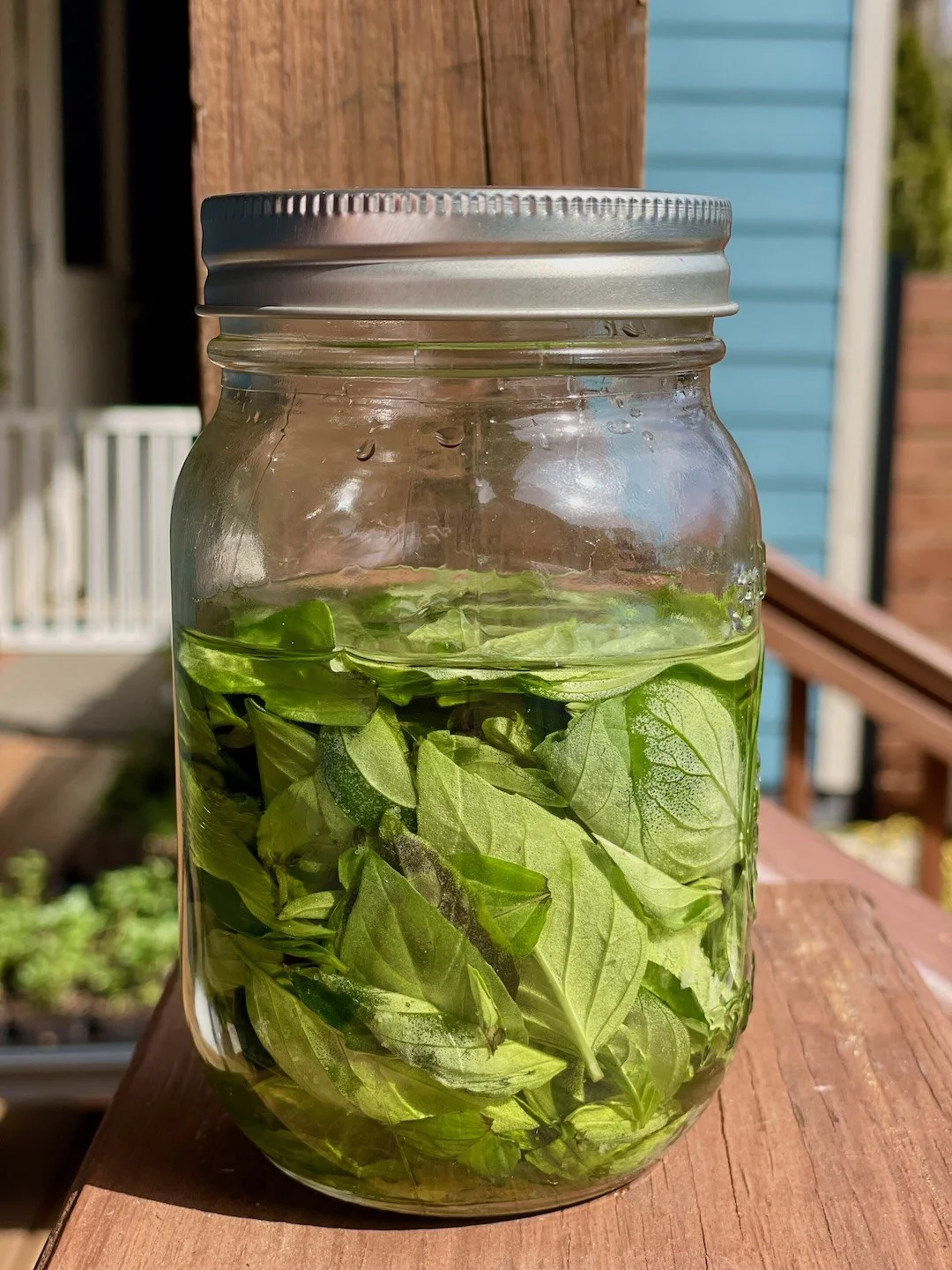
• Steep in simple syrup for Thai basil lemonade or cocktails
• Blend into a Thai basil vinaigrette with lime and fish sauce
Tips
• Thai basil is more heat-stable than Italian basil — it can be added earlier in cooking without losing all its character.
• The flavor is bold and distinctive; a little goes a long way for those unfamiliar with it.
• Pairs classically with coconut milk, lemongrass, lime, chili, ginger, and fish sauce.
• The purple flowers are edible and make beautiful garnishes with a slightly milder flavor than the leaves.
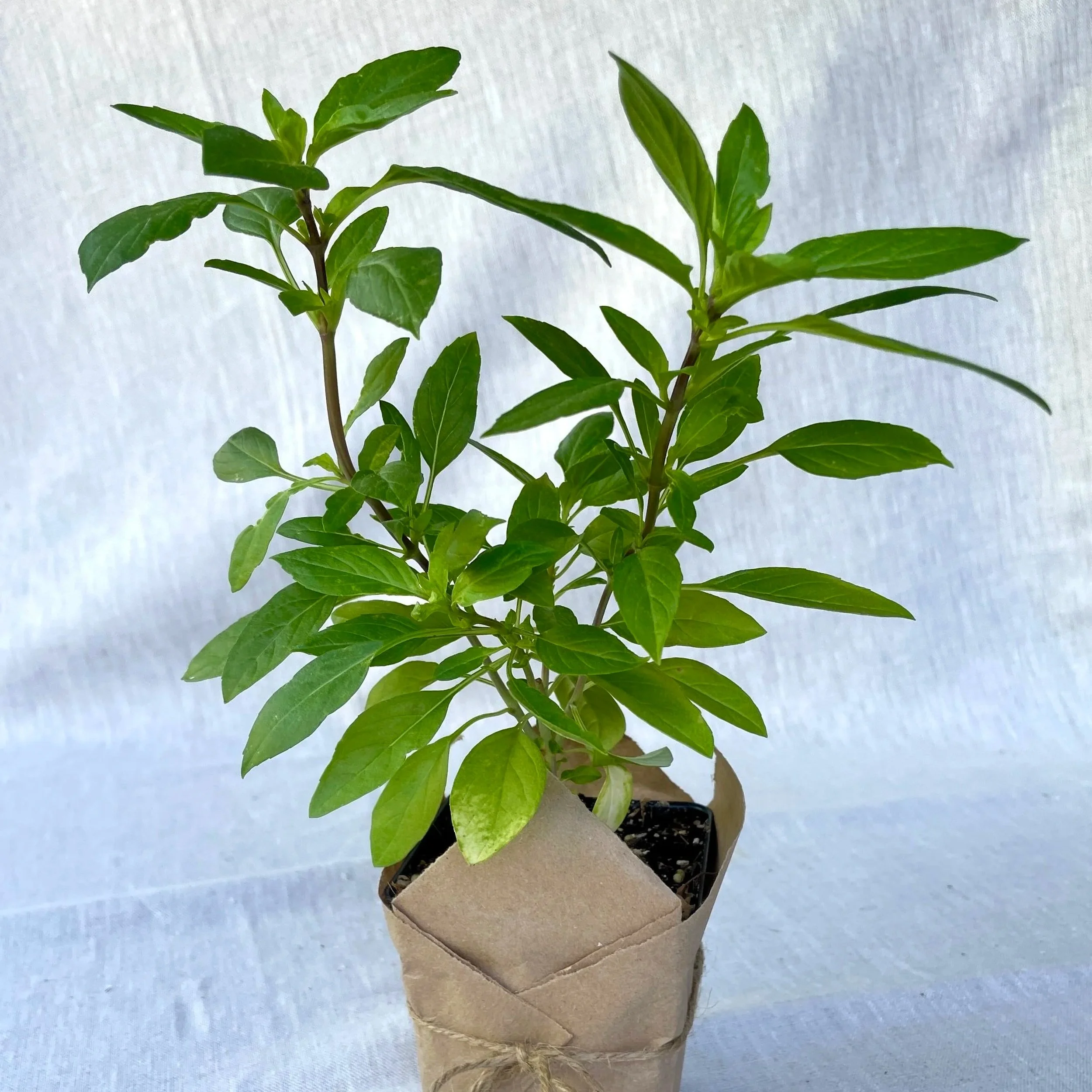
HOW THIS PLANT GROWS Thai basil grows upright with glossy, dark green leaves, distinctive purple stems, and purple flower spikes. It is more sturdy and heat-tolerant than Italian basil and has an unmistakable exotic fragrance.
GROW JOYFULLY Thai basil brings the fragrance of a Southeast Asian kitchen to your windowsill or patio. Grow it, use it generously, and let it transform simple weeknight cooking into something extraordinary.