
Berggarten Sage
BASICS FOR YOUR HOME
Kid-Friendly: Yes
Pet-Friendly: Yes (in small culinary amounts; larger quantities not recommended)
Indoors: Bright window; grows better outdoors
Container Outdoors: Yes
In-Ground: Yes; perennial in zones 4–8
Light: Full Sun
Temperature: Hardy perennial; tolerates frost
Water: Low
CARE INSTRUCTIONS
LIGHT: Berggarten sage needs full sun — at least 6–8 hours daily. Like all Mediterranean sages, it thrives in bright, hot, dry conditions. Inadequate light leads to leggy growth and less flavorful leaves.
WATER: Water when the soil is completely dry. Berggarten sage is drought-tolerant and suffers in consistently moist soil. It is more forgiving of drought than overwatering. Excellent drainage is essential.
SOIL & POT: Use a lean, well-draining potting mix or sandy soil. Rich, moist soil reduces flavor intensity and increases susceptibility to root rot. Terracotta pots are ideal.
SEASONAL TIPS: Berggarten sage is a cultivar selected for its large, rounded leaves and compact habit — it rarely flowers, making it ideal as a purely culinary sage. Cut back lightly in spring to encourage fresh growth. Plants may become woody after 4–5 years; replace with a new plant for the best leaf production.
HOW TO HARVEST
• Snap or snip individual leaves or stem tips
• Harvest mature leaves — they have the most concentrated flavor
• Harvest in the morning for peak aroma
• Regular harvesting encourages compact, productive growth
• Because Berggarten rarely flowers, there is no need to pinch for bolting
HOW TO USE
Berggarten sage has the classic earthy, savory, slightly peppery sage flavor — but with notably large, velvety leaves that make it a pleasure to cook with. It is the finest culinary sage variety for kitchen use.
Fresh
• Fry whole leaves in butter until crisp for a classic pasta garnish (brown butter sage)
• Tear into roasted squash, sweet potatoes, or root vegetable dishes
• Add to stuffing, dressings, and bread fillings
• Layer into pork, chicken, or turkey dishes
• Add to compound butter for pasta or roasted poultry
Dried
• Dry leaves on a screen in a warm, airy spot — sage dries beautifully
• Crumble into spice rubs for pork and sausage
• Add to poultry seasoning and Italian herb blends
Infused
• Steep in olive oil with garlic for a simple pasta sauce base
• Infuse into brown butter for a classic finishing sauce
Tips
• A little sage goes a long way — it is one of the stronger culinary herbs.
• The large leaves of Berggarten are especially beautiful fried in butter until crisp.
• Pairs classically with brown butter, pork, poultry, squash, and white beans.
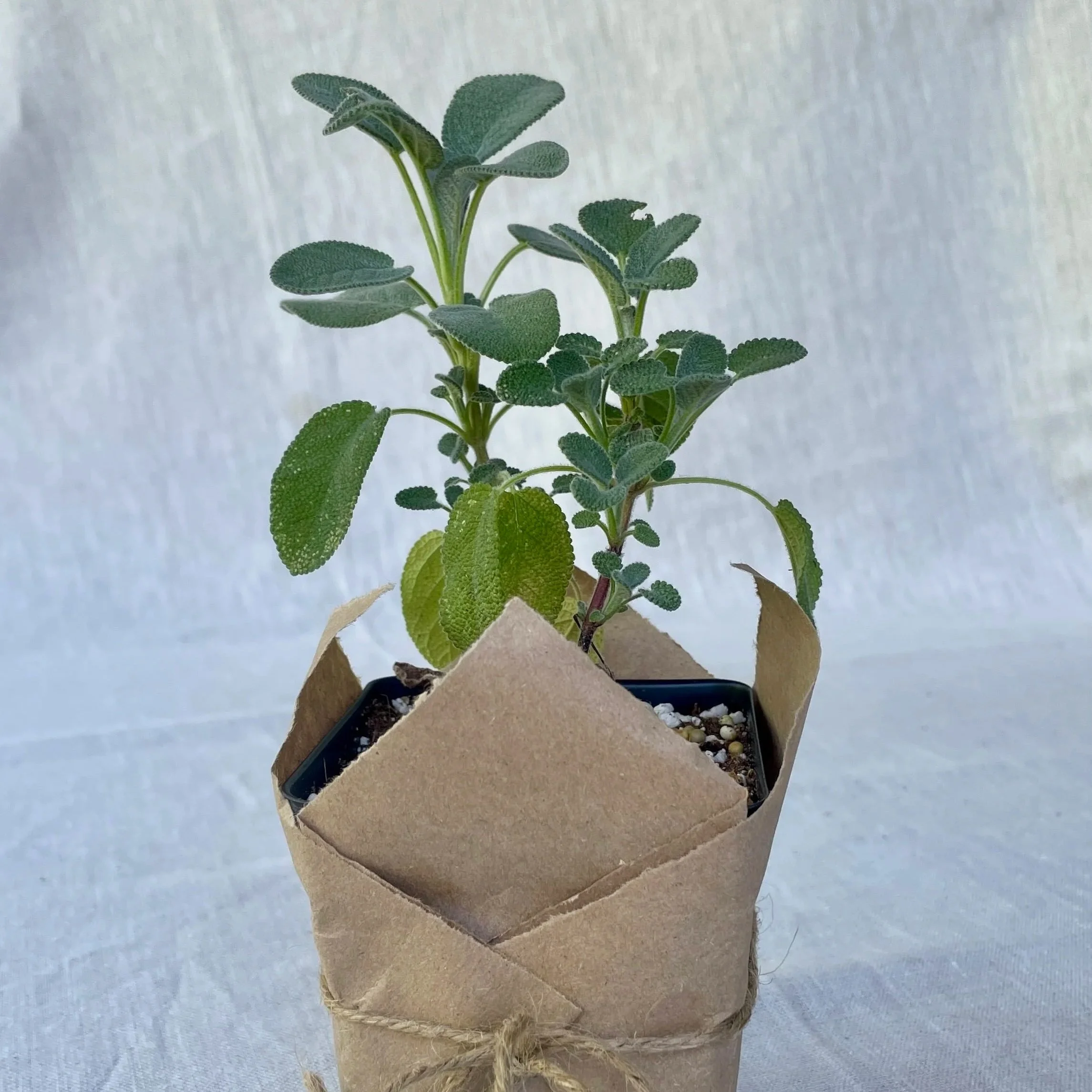
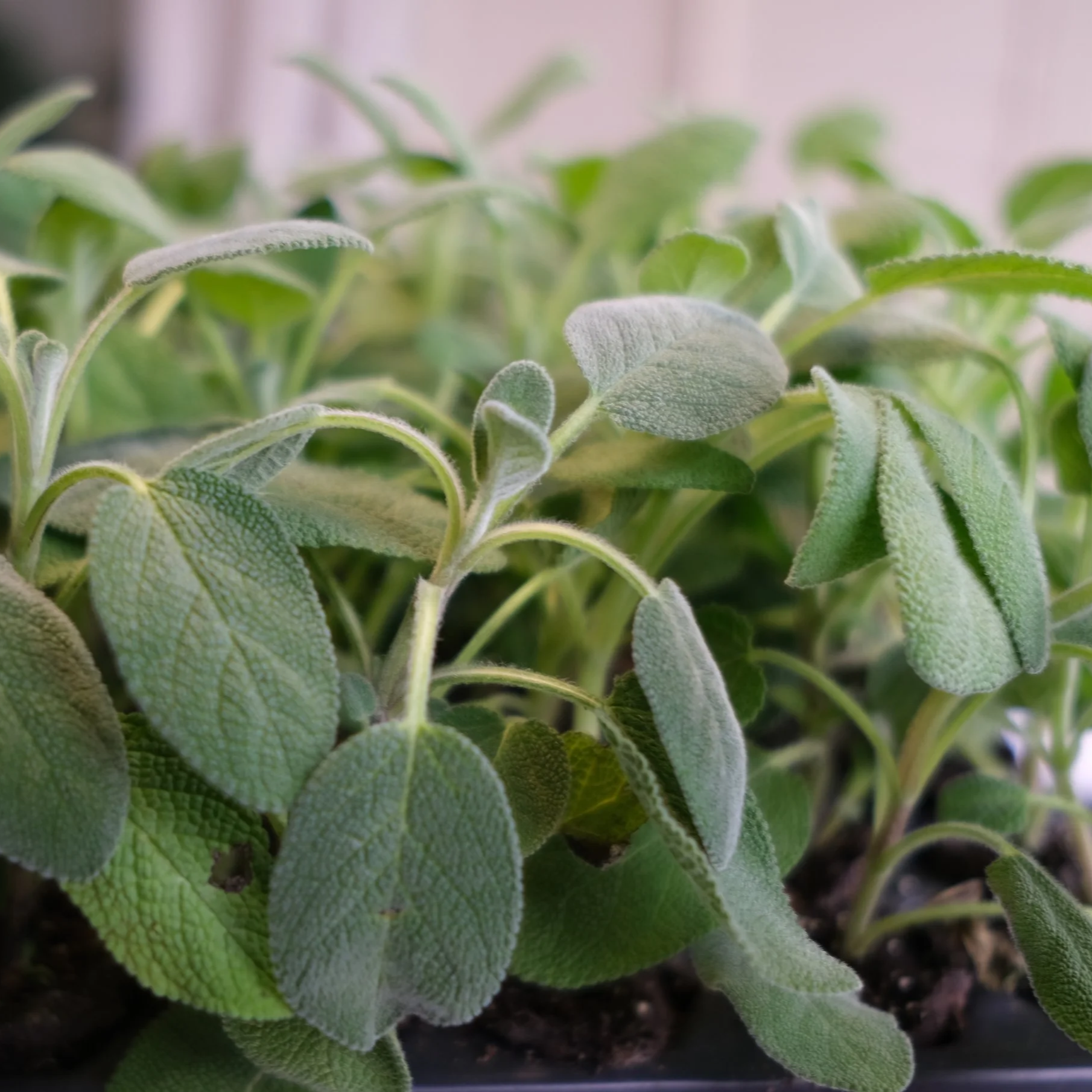
HOW THIS PLANT GROWS Berggarten sage is a low, mounding shrub with exceptionally large, velvety gray-green leaves. Unlike common sage, it rarely flowers, remaining productive and compact throughout the season.
GROW JOYFULLY Berggarten sage is the workhorse of the culinary sage world. It asks for little, offers beautiful large leaves all season, and makes everything from roasted squash to pasta taste like it was made with intention.