
Pineapple Sage
BASICS FOR YOUR HOME
Kid-Friendly: Yes
Pet-Friendly: Yes
Indoors: Bright window; can overwinter indoors in a sunny spot
Container Outdoors: Yes (excellent container plant)
In-Ground: Zones 8–10 as perennial; annual in colder zones
Light: Full Sun
Temperature: Tender perennial; bring indoors before first frost
Water: Moderate
CARE INSTRUCTIONS
LIGHT: Pineapple sage needs full sun — at least 6–8 hours daily. It is a vigorous grower in bright, warm conditions. Indoors, place in the sunniest window available.
WATER: Water when the top inch of soil is dry. Pineapple sage tolerates some drought but is not as forgiving as Mediterranean sages. Consistent moisture during the growing season produces the lushest growth. Ensure excellent pot drainage.
SOIL & POT: Use a well-draining, fertile potting mix in a large container — pineapple sage grows into a substantial shrub (up to 4 feet in warm conditions). A 12-inch or larger pot is recommended.
SEASONAL TIPS: Cut back by ⅓ in midsummer to encourage bushy regrowth and delay flowering. Pineapple sage produces stunning scarlet flowers in fall — if you want to enjoy them, stop pinching in late summer and let it bloom. Overwinter in a bright indoor spot; it will regrow from the base in spring.
HOW TO HARVEST
• Harvest stem tips regularly throughout the growing season
• Strip individual leaves as needed
• Both leaves and flowers are edible
• Harvest flowers when fully open for use as garnishes
• Do not harvest more than ⅓ of the plant at a time
HOW TO USE
Pineapple sage has a light, sweet, tropical pineapple fragrance with a savory sage undertone. The flavor is more delicate than common sage and shines in applications where you want a surprising fruity-herbal note.
Fresh
• Add leaves to fruit salads, especially with citrus, melon, or berries
• Muddle into cocktails and lemonade — pairs especially well with rum and tequila
• Float flowers on drinks, desserts, or cheese boards as a stunning garnish
• Stir into yogurt, cream cheese, or honey
• Add to chicken or pork marinades for a subtle tropical note
Tea
• Steep fresh or dried leaves in hot water for a fragrant herbal tea
• Blend with lemon verbena, chamomile, or hibiscus
Dried
• Dry leaves on a screen; the fragrance mutes slightly when dried but remains pleasant
• Use in herbal tea blends or potpourri
Infused
• Steep in simple syrup for tropical cocktails and mocktails
• Infuse into honey for a floral pineapple sweetener
Tips
• The flowers are the star garnish of the season — beautiful red trumpets that taste as good as they look.
• The pineapple fragrance is strongest in fresh leaves just after harvest.
• Pairs beautifully with rum, coconut, citrus, berries, and honey.
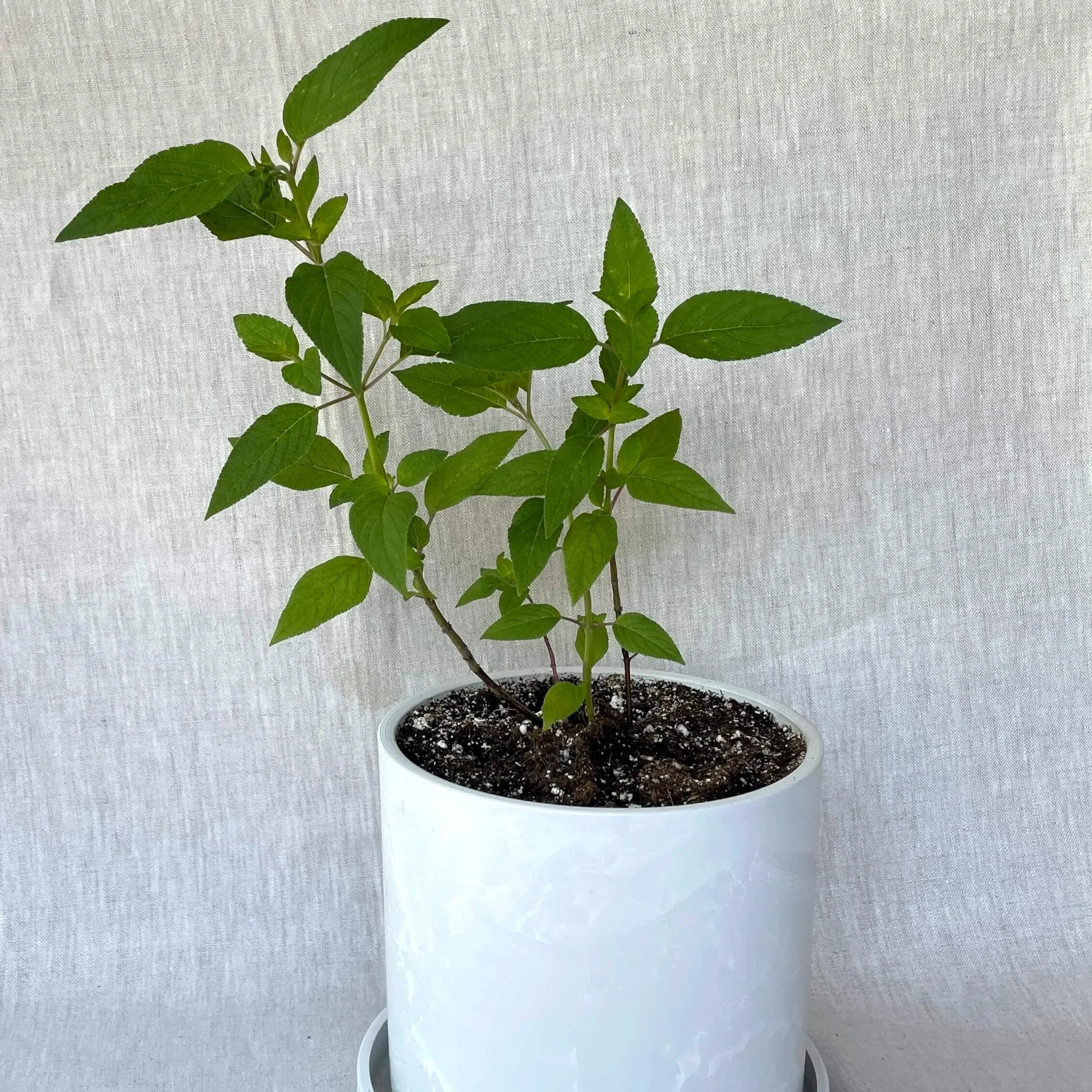
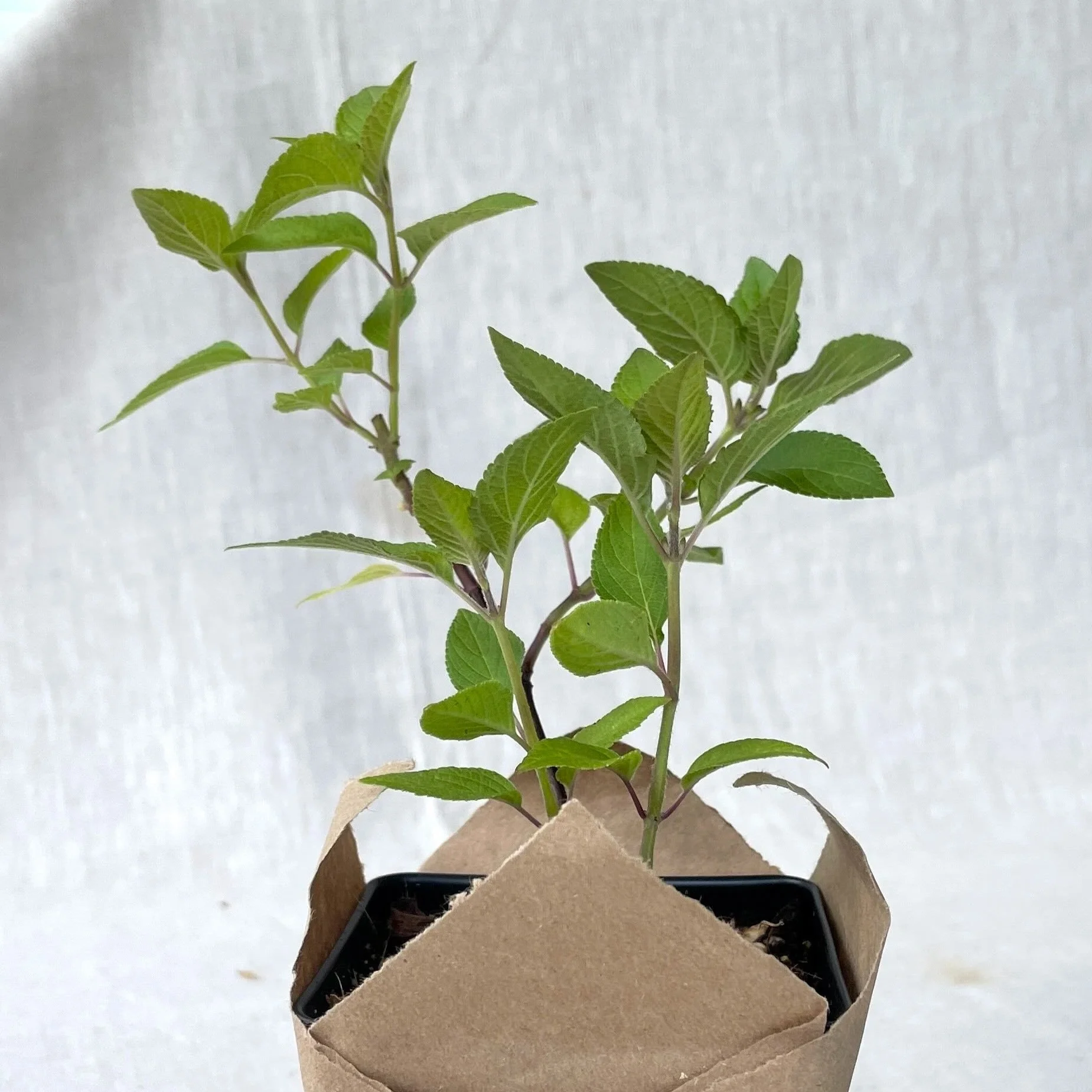
HOW THIS PLANT GROWS Pineapple sage grows as a large, shrubby perennial with soft, velvety, bright green leaves. In fall it produces tall spikes of brilliant scarlet-red tubular flowers that are magnets for hummingbirds.
GROW JOYFULLY This is a plant of generous gifts — fragrant leaves in summer, stunning flowers in fall, and a reason to keep your container growing through the cooler months.