
Lemongrass
BASICS FOR YOUR HOME
Kid-Friendly: Yes
Pet-Friendly: Yes (in small amounts; large quantities not recommended)
Indoors: Bright window; can overwinter indoors
Container Outdoors: Yes (standard growing method in most of the US)
In-Ground: Zones 9–11 only; frost-sensitive
Light: Full Sun
Temperature: Tender perennial; bring indoors before first frost
Water: Moderate to High
CARE INSTRUCTIONS
LIGHT: Lemongrass is a sun-loving tropical grass that needs full sun — at least 6–8 hours daily. It grows vigorously in warm, bright conditions and slowly in shade or cool weather.
WATER: Keep soil consistently moist but not waterlogged. Lemongrass is a thirstier plant than most herbs, especially in summer heat. Check containers frequently during hot weather — they can dry out quickly.
SOIL & POT: Use a rich, well-draining potting mix in a large container — at least 12 inches wide and deep. Lemongrass grows into substantial clumps and appreciates room to expand. Feed monthly during the growing season.
SEASONAL TIPS: Lemongrass grows vigorously in summer and slows dramatically as temperatures drop. Before the first frost, cut stalks back to 6 inches and move indoors to a bright window. It will overwinter as a dormant clump and resume growth in spring. Divide large clumps in spring to create new plants.
HOW TO HARVEST
• Harvest outer stalks once the clump is well-established (at least 12 inches tall)
• Pull or cut individual stalks from the base of the clump
• Peel away the outer leaves to reach the pale, tender inner stalk — this is the culinary-quality portion
• Upper green portions of the stalk can be used for tea infusions and broths
• Regular harvesting encourages the clump to keep producing
HOW TO USE
West Indian lemongrass has a bright, citrusy, slightly floral lemon flavor with grassy, herbal undertones. It is the classic lemongrass used in Southeast Asian cooking and herbal teas.
Fresh
• Peel outer leaves; bruise or slice the pale inner stalk
• Add whole bruised stalks to Thai curries, soups, and stews — remove before eating
• Mince tender inner stalks for curry pastes, marinades, and stir-fries
• Add sliced stalks to seafood and chicken dishes
Tea
• Slice the stalk or use bruised upper leaves; steep in boiling water for 5–10 minutes
• Blend with ginger, mint, or citrus for herbal tea mixes
• Add to kombucha or cold brew iced tea
Infused
• Infuse into coconut milk for curries and desserts
• Steep in simple syrup for cocktails, lemonade, and mocktails
• Infuse into oils and vinegars for Asian-inspired dressings
Frozen
• Freeze whole stalks — no blanching needed; grate or slice directly from frozen
Tips
• Only the lower, pale portion of the stalk has significant culinary flavor for cooking; the upper leaves are best for teas.
• Pairs classically with coconut milk, ginger, galangal, kaffir lime, and chili.
• Lemongrass is meant to flavor a dish, not be eaten whole — remove large pieces before serving.
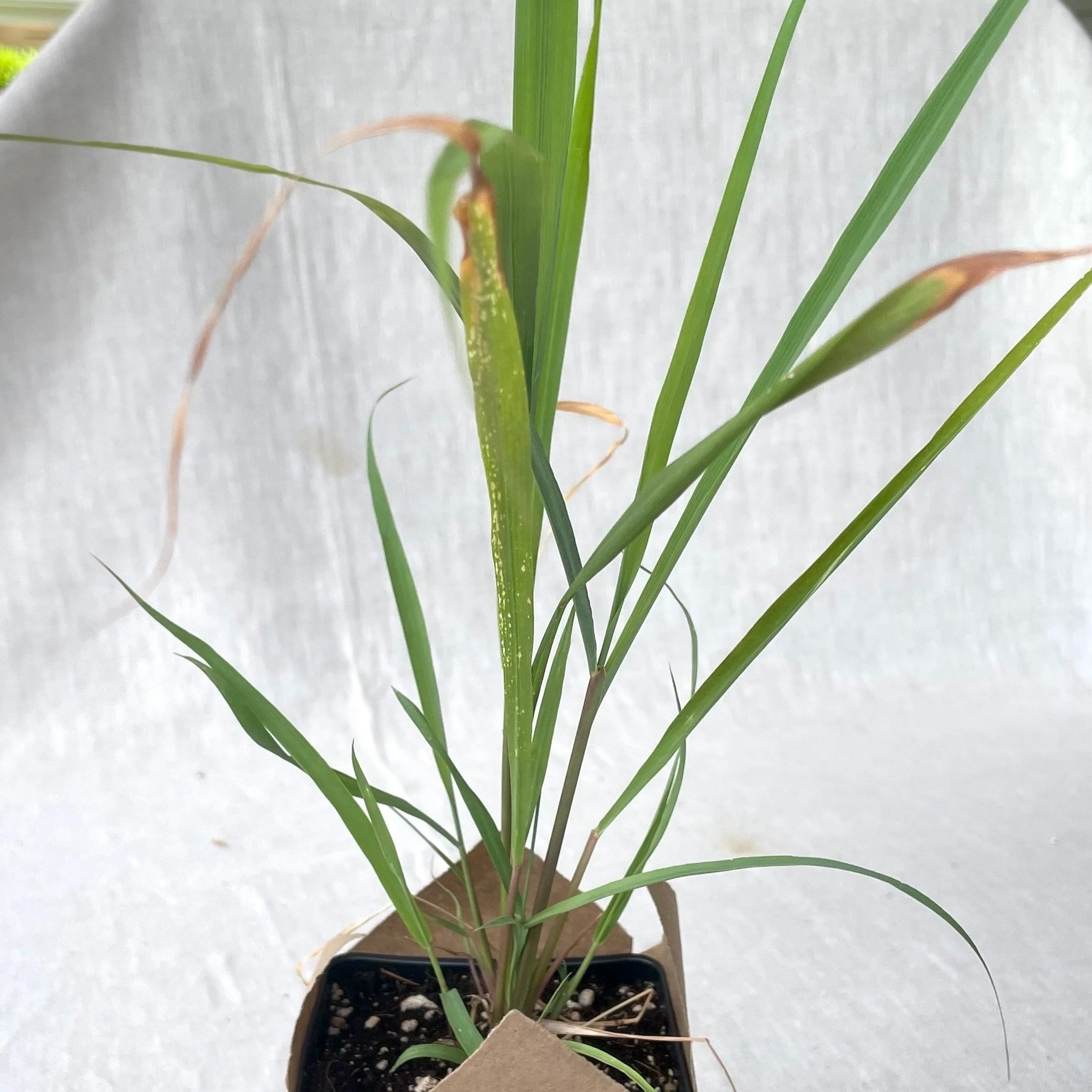
HOW THIS PLANT GROWS West Indian lemongrass grows as a tall, clumping tropical grass with long, arching, blue-green leaves. In warm climates it can reach 4–5 feet tall; in containers it stays more compact but grows vigorously.
GROW JOYFULLY Lemongrass has an honest, generous nature — it grows big and fast and fills the air with fragrance. Give it a large pot, full sun, and consistent water, and it will reward you abundantly.