
Garlic Chives
BASICS FOR YOUR HOME
Kid-Friendly: Yes
Pet-Friendly: No — alliums (including chives) are toxic to cats and dogs; keep out of reach
Indoors: Bright window; grows well on a sunny kitchen windowsill
Container Outdoors: Yes
In-Ground: Yes; perennial in zones 3–9
Light: Full Sun to Part Shade
Temperature: Hardy perennial; tolerates frost
Water: Low to Moderate
CARE INSTRUCTIONS
LIGHT: Garlic chives grow best in full sun but are tolerant of partial shade. Indoors, a bright south- or east-facing window keeps them productive. Grow light supplementation works well in low-light kitchens.
WATER: Water when the top inch of soil is dry. Garlic chives are drought-tolerant and prefer to dry slightly between waterings. Consistent overwatering leads to yellowing and rot.
SOIL & POT: Average, well-draining potting mix is ideal. Garlic chives are undemanding and grow well in smaller containers — a 6-inch pot is sufficient for a kitchen herb.
SEASONAL TIPS: Garlic chives produce flat, strap-like leaves and white, star-shaped flowers in late summer. Deadhead flowers to prevent aggressive self-seeding. Divide clumps every 2–3 years to maintain vigor.
HOW TO HARVEST
• Cut leaves to within 1–2 inches of the soil, like cutting grass
• New growth regrows within 2–3 weeks
• Harvest the entire clump at once or snip individual leaves as needed
• Flowers and flower buds are also edible
• Regular harvesting keeps the plant productive and prevents flowering if desired
HOW TO USE
Garlic chives have a mild, grassy flavor with a distinct garlic undertone — gentler than regular garlic, with more depth than standard chives. Both leaves and flowers are edible.
Fresh
• Chop and stir into dumplings, stir-fries, or fried rice — a classic in Asian cooking
• Add to noodle soups, ramen, or pho as a garnish
• Mix into soft cheeses, dips, or compound butters
• Fold into scrambled eggs or omelets
• Use as a garnish on baked potatoes or soups
Cooked
• Stir-fry whole garlic chive stems in sesame oil with tofu or shrimp
• Add to gyoza filling or Korean pajeon (scallion pancakes)
• Use in Korean kimchi or other fermented vegetable dishes
Flowers
• Edible raw — mild garlic flavor; use as a garnish on salads or cheeses
• Beautiful in flower arrangements as well as on the plate
Tips
• Add at the very end of cooking — garlic chives lose their flavor with prolonged heat.
• The flowers have a slightly stronger flavor than the leaves.
• Pairs well with sesame, soy, ginger, eggs, and mild cheeses.
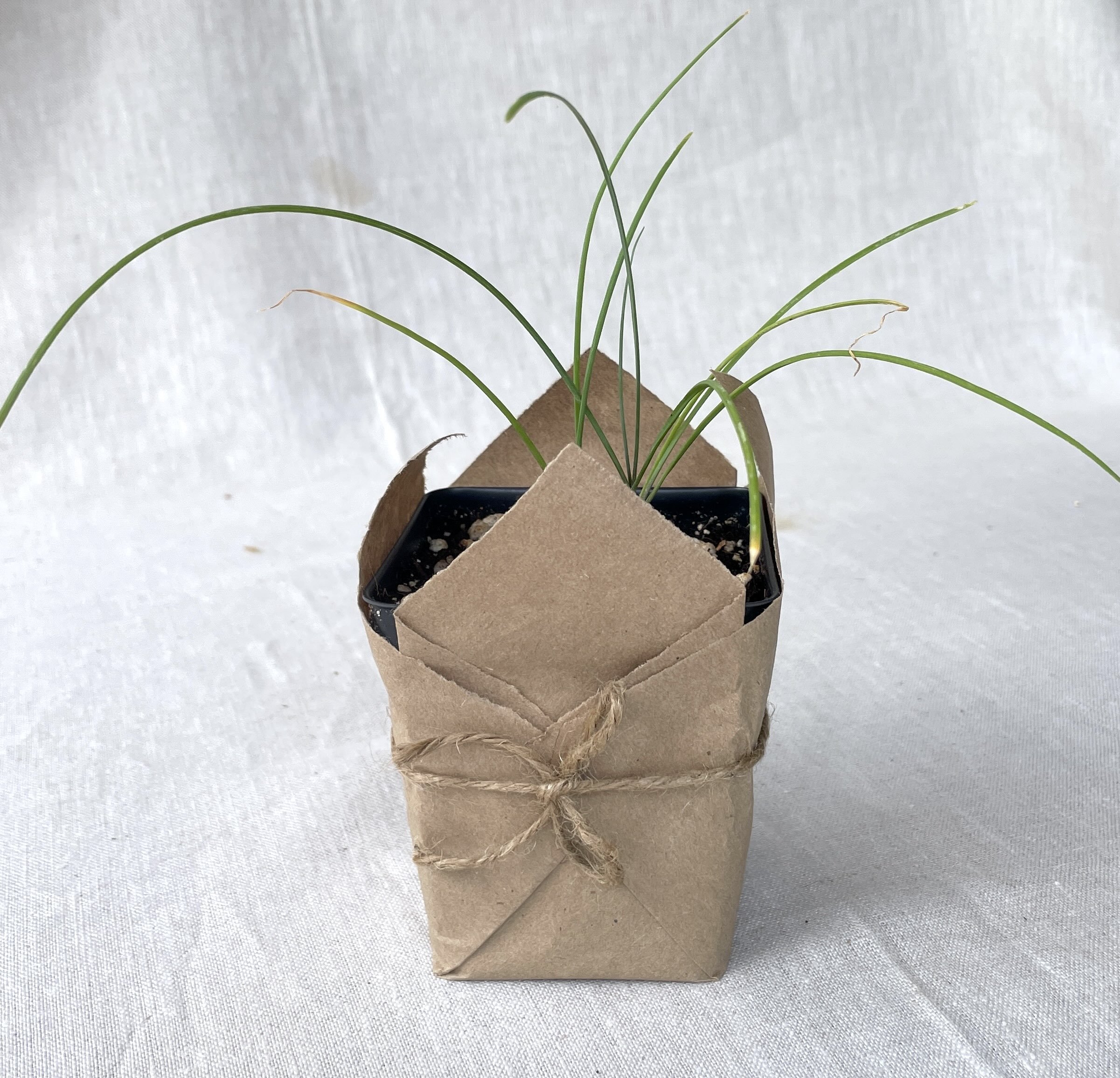
HOW THIS PLANT GROWS Garlic chives grow in dense clumps of flat, strap-like leaves. They produce clusters of small white flowers in late summer on upright stems. Over time, clumps expand and can be divided for new plants.
GROW JOYFULLY Garlic chives are one of the most low-maintenance herbs you can grow. Cut them back regularly and they’ll reward you with fresh growth season after season.