
French Tarragon
BASICS FOR YOUR HOME
Kid-Friendly: Yes
Pet-Friendly: Yes
Indoors: Bright window; grows better outdoors or in a greenhouse
Container Outdoors: Yes
In-Ground: Yes; perennial in zones 4–8
Light: Full Sun to Part Shade
Temperature: Hardy to zone 4; prefers a warm growing season
Water: Low to Moderate
CARE INSTRUCTIONS
LIGHT: French tarragon prefers full sun but tolerates afternoon shade, especially in hot climates. At least 6 hours of direct light daily is ideal.
WATER: Water when the top inch of soil is dry. French tarragon is drought-tolerant and will rot if kept too wet. This is one of the most common mistakes with this herb — when in doubt, underwater.
SOIL & POT: Use a well-draining potting mix or sandy garden soil. Rich, heavy soil reduces flavor intensity. Choose a deep pot to accommodate its taproot.
SEASONAL TIPS: French tarragon rarely sets viable seed — it is propagated by division or cuttings. Plants die back in winter and return in spring. Divide every 2–3 years to keep the plant vigorous. Note: Always choose French tarragon (not Russian) for culinary use — Russian tarragon has almost no flavor.
HOW TO HARVEST
• Begin harvesting when stems reach 8–10 inches long
• Snip stems at the base of the plant or just above a leaf node
• Harvest in the morning for the most concentrated flavor
• Avoid harvesting more than ⅓ of the plant at a time
• Flavor is most intense in early summer, before flowering
HOW TO USE
French tarragon has a sophisticated anise-like flavor with warm, herbal undertones. It is a cornerstone of classical French cooking and one of the four classic “fines herbes.”
Fresh
• Stir into béarnaise sauce, hollandaise, or vinaigrettes
• Add to compound butters for steak or roasted chicken
• Toss into egg dishes — omelets, scrambled eggs, frittatas
• Mix into cream-based pasta sauces
• Add to potato salad or chicken salad for a French-inspired twist
Dried
• Dry stems loosely in a warm, airy spot; strip leaves before storing
• Dried tarragon is more muted than fresh — use generously
• Add to spice rubs for chicken, fish, or pork
Infused
• Steep in white wine vinegar for a classic tarragon vinegar — excellent in salad dressings
• Infuse into cream or butter for savory sauces
Tips
• Tarragon’s flavor fades quickly with high heat — add toward the end of cooking.
• A little goes a long way; start with less and taste as you go.
• Pairs classically with chicken, eggs, fish, mustard, lemon, and cream.
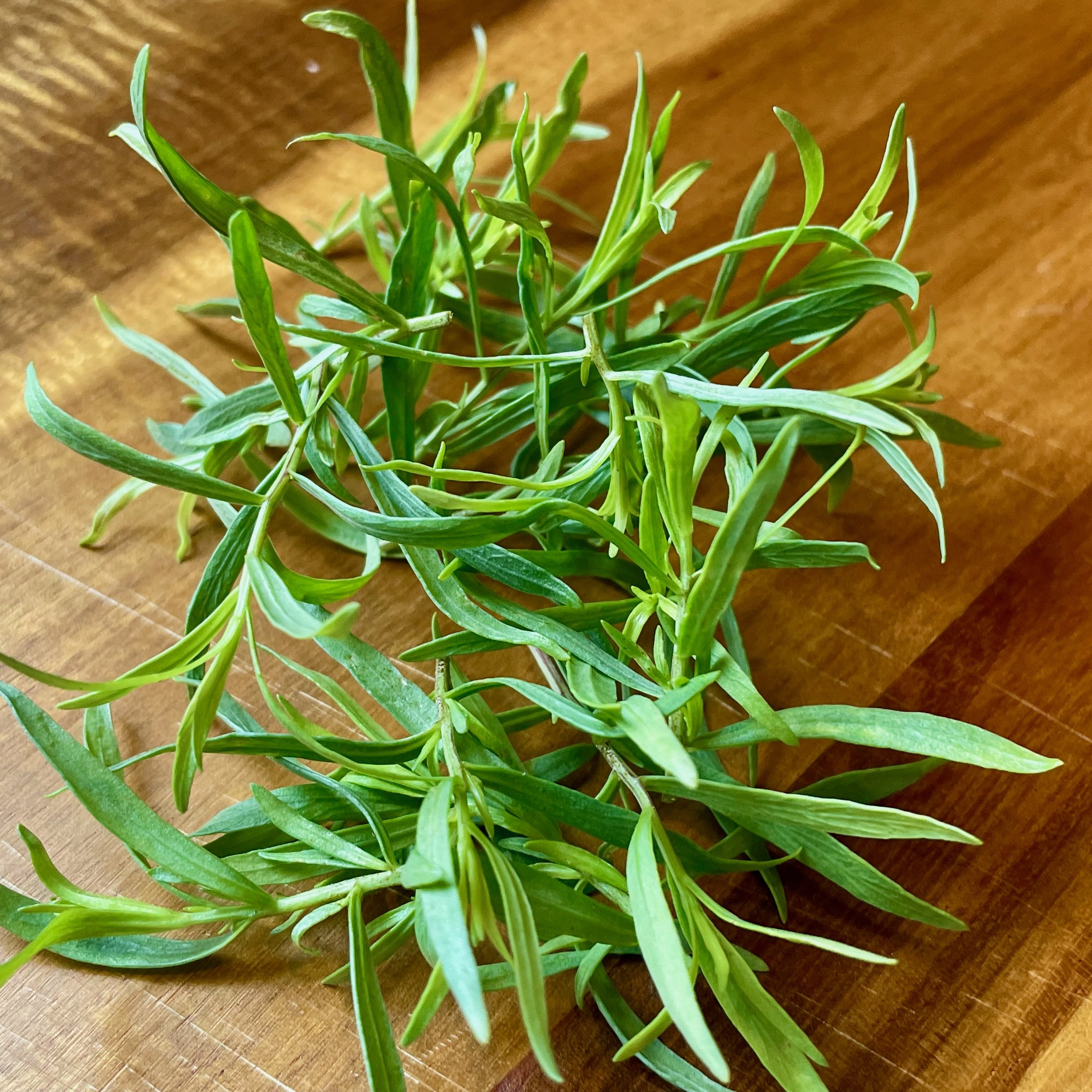
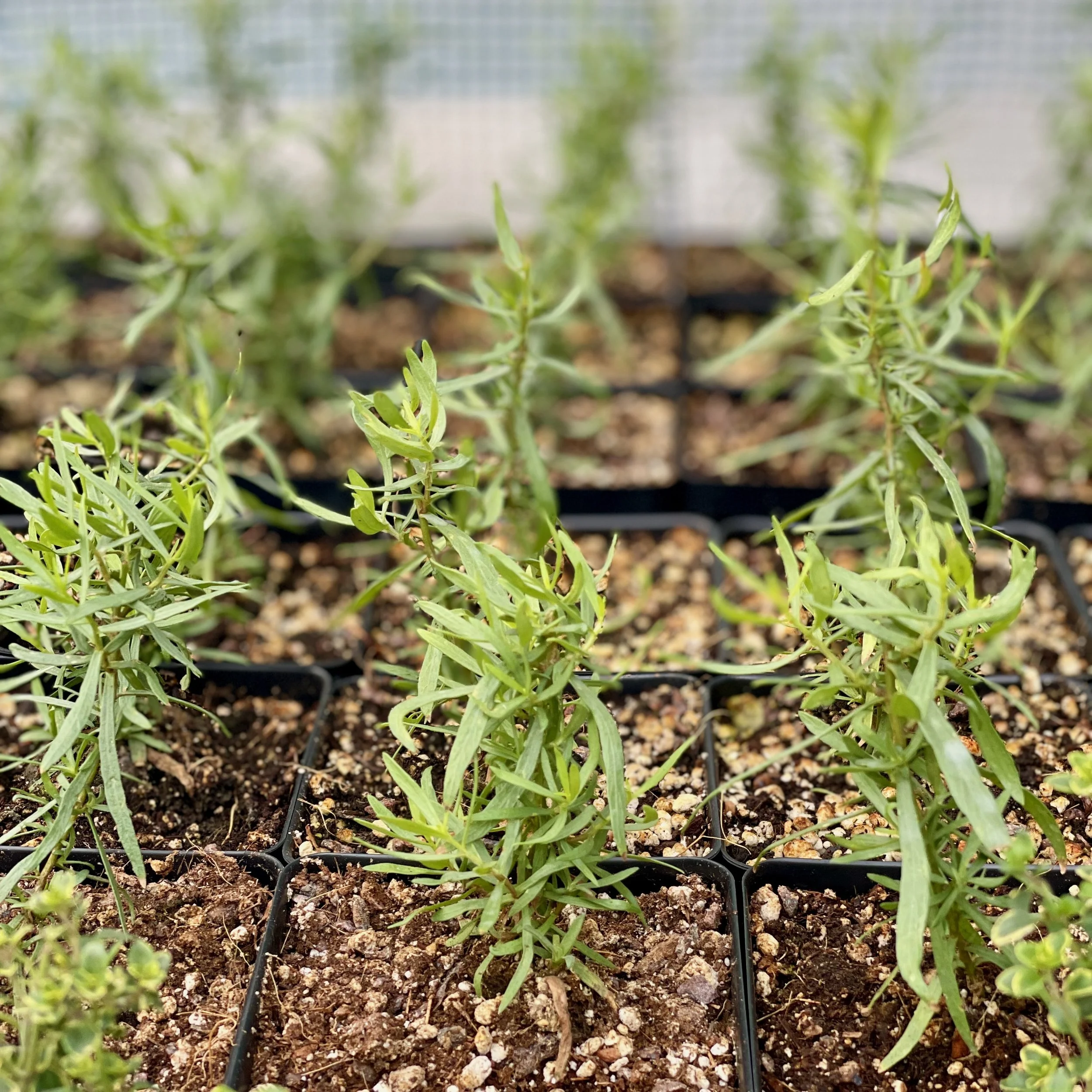
HOW THIS PLANT GROWS French tarragon grows as a graceful, upright perennial with narrow, glossy dark green leaves on branching stems. It spreads slowly by underground runners and can be divided to create new plants.
GROW JOYFULLY French tarragon is the quiet sophisticate of the herb garden. It asks for little, produces reliably, and elevates everything it touches in the kitchen.