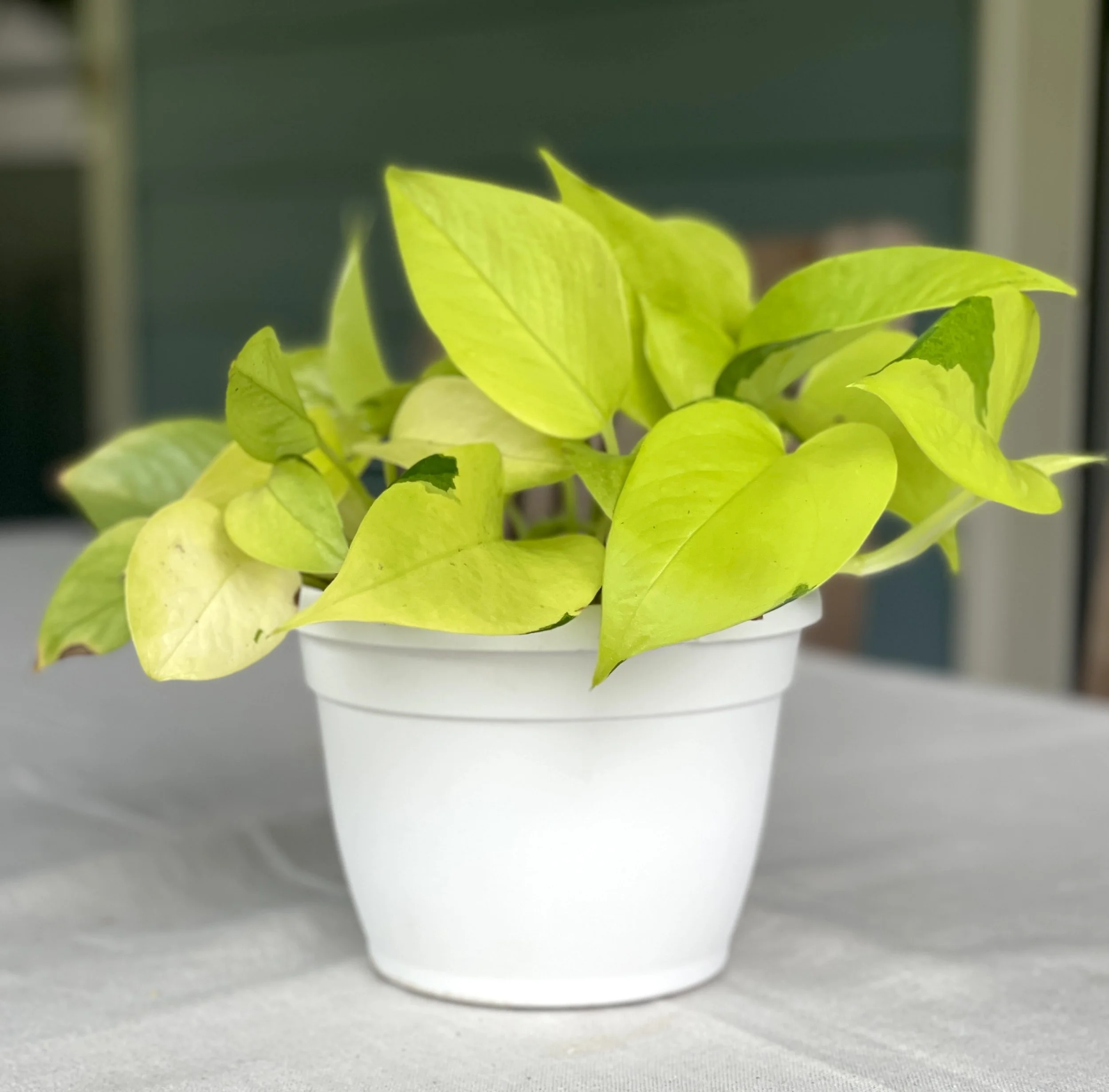
Neon Pothos
The one that glows — and grows — no matter what.
Ready to bring one home? Shop Neon Pothos.
BASICS FOR YOUR HOME
Kid-Friendly: No — keep out of reach
Pet-Friendly: No — toxic to cats and dogs
Indoors: Yes — almost anywhere
Container Outdoors: Yes (warm months only)
In-Ground: Not recommended
Light: Low light to bright indirect light
Temperature: Above 50°F — no cold drafts
Water: Moderate — forgiving if you miss a watering
A LITTLE BACKGROUND
Neon Pothos is a cultivar of Epipremnum aureum — one of the most widely grown houseplants in the world, and for good reason. Native to the forest floors of French Polynesia and Southeast Asia, pothos spent millennia as a ground-covering, tree-climbing vine, reaching toward whatever light filtered down through the canopy above. That adaptability is baked into its DNA, which is why it thrives in conditions that would stress most other plants.
The Neon variety is distinguished by its electric chartreuse color — a result of higher chlorophyll expression that actually intensifies with more light. The brighter the spot, the more vivid the color. In lower light, it softens to a quieter lime green, still beautiful, just a little more understated.
In many cultures, pothos is considered a symbol of good luck and prosperity. It shows up in homes, offices, and restaurants the world over — not just because it's easy, but because it genuinely makes a space feel more alive.
CARE INSTRUCTIONS
LIGHT: Neon Pothos is remarkably adaptable when it comes to light — it will survive in low light conditions that would challenge most houseplants. That said, it truly thrives in bright indirect light, and that's where the color really comes alive. The more light it gets, the more vivid that chartreuse becomes. If your space is on the darker side, a grow light set to 10–12 hours per day will keep it happy and colorful. Direct sun will scorch the leaves, so keep it a few feet back from a south-facing window.
WATER: Water when the top inch of soil feels dry. Neon Pothos is one of the most forgiving houseplants when it comes to watering — it will bounce back from an occasional missed watering without drama. What it doesn't love is sitting in soggy soil, so make sure your pot has drainage and empty the saucer after watering. When in doubt, wait another day.
SOIL & POT: A standard well-draining indoor potting mix works perfectly. A hanging pot with drainage holes shows off its trailing habit beautifully — this is a plant that wants to spill and cascade. Repot when roots begin to circle the bottom or emerge from drainage holes, typically every 1–2 years.
FEEDING: Feed once a month during spring and summer with a balanced liquid fertilizer diluted to half strength. Skip feeding in fall and winter when growth naturally slows.
TEMPERATURE & DRAFTS: Keep above 50°F and away from cold windows, air conditioning vents, and exterior doors in winter. It's tropical at heart — it wants warmth and consistency.
HOW THIS PLANT GROWS
Neon Pothos grows as a trailing vine with heart-shaped leaves in that distinctive electric chartreuse. It's a fast grower once settled, putting out new leaves regularly during the growing season. Give it something to trail from — a high shelf, a hanging pot, a bookcase — and it will reward you. It can also climb a moss pole or trellis if you want it to grow upward instead. Leaves tend to get larger as the plant matures and finds its footing.
TROUBLESHOOTING
Yellowing leaves: Usually overwatering or poor drainage. Let the soil dry out a little more between waterings and check that your pot has adequate drainage.
Color fading to pale green or yellow-green: Not enough light. Move it closer to a bright window or add a grow light. The color is directly tied to light levels — more light, more color.
Brown crispy tips: Low humidity or inconsistent watering. Try a pebble tray with water nearby or move it away from heating and cooling vents.
Leggy, widely spaced leaves: Also a light issue. This plant stretches toward light when it isn't getting enough — move it to a brighter spot.
Wilting despite moist soil: Check the roots for rot. If the soil has been consistently wet, the roots may be damaged. Trim any soft, dark roots, let the soil dry out, and resume watering more conservatively.
A NOTE ON TOXICITY
Neon Pothos is toxic to cats, dogs, and humans if ingested. Keep it out of reach of pets and small children. It's safe to handle and touch — just don't eat it.
GROW JOYFULLY
Neon Pothos is one of those plants that makes you feel like you know what you're doing — because with this one, you genuinely can't go wrong. Give it a little light, a little water, and a place to trail, and it will do the rest. That color in your space, catching the light on a sunny afternoon, is worth every bit of the minimal effort it takes to get there.
Neon Pothos is available in our store while supplies last. Shop now.