
Lemon Thyme
BASICS FOR YOUR HOME
Kid-Friendly: Yes
Pet-Friendly: Yes (in small culinary amounts; large quantities not recommended for cats)
Indoors: Bright window; grows well as a kitchen herb
Container Outdoors: Yes
In-Ground: Yes; perennial in zones 4–9
Light: Full Sun
Temperature: Hardy perennial; tolerates frost
Water: Low
CARE INSTRUCTIONS
LIGHT: Lemon thyme needs full sun — at least 6 hours daily. It is drought and heat tolerant and grows best in bright, warm conditions. Indoors, a south-facing window or grow light keeps it productive.
WATER: Water only when the soil is completely dry. Lemon thyme is a Mediterranean herb that tolerates drought well and suffers in constantly moist soil. It is one of the most drought-tolerant herbs you can grow.
SOIL & POT: Use a lean, well-draining mix — avoid rich, moisture-retentive potting soils. Sandy or gritty mixes work especially well. Excellent drainage prevents the root rot that is the primary cause of thyme failure.
SEASONAL TIPS: Cut plants back by ⅓ after flowering to maintain a compact shape and encourage fresh growth. Avoid cutting into old, woody stems. In cold climates, mulch lightly in winter for protection. Divide every 2–3 years to keep plants vigorous.
HOW TO HARVEST
• Snip stems from the tips, cutting back to just above a leaf node
• Harvest regularly to prevent woody, leggy growth
• Flavor is most concentrated just before flowering
• Both leaves and flowers are edible
• Harvest in the morning for peak fragrance
HOW TO USE
Lemon thyme has the classic savory, slightly earthy flavor of common thyme layered with a bright, genuine lemon fragrance. It is one of the most versatile herbs in the kitchen.
Fresh
• Add to roasted chicken, fish, or vegetables in the last few minutes of cooking
• Strip leaves into compound butter with garlic and lemon zest
• Stir into vinaigrettes and marinades
• Add to honey-glazed carrots or roasted sweet potatoes
• Garnish soups and chowders
Dried
• Air-dry stems in small bundles — dried lemon thyme is excellent in spice blends and herb mixes
• Add to roasted meat rubs, poultry seasoning, and Herbes de Provence variations
• Use in long-cooked dishes like braises and stews
Infused
• Steep in olive oil with lemon zest for a fragrant cooking oil
• Infuse into honey for drizzling over cheese, yogurt, or toast
• Add sprigs to simple syrup for lemon thyme lemonade or cocktails
Tips
• Lemon thyme is hardier with heat than many herbs — it can be added earlier in the cooking process.
• Pairs beautifully with lemon, garlic, honey, chicken, fish, and root vegetables.
• The lemon fragrance is true and bright — it genuinely enhances dishes where you’d use both thyme and lemon zest.
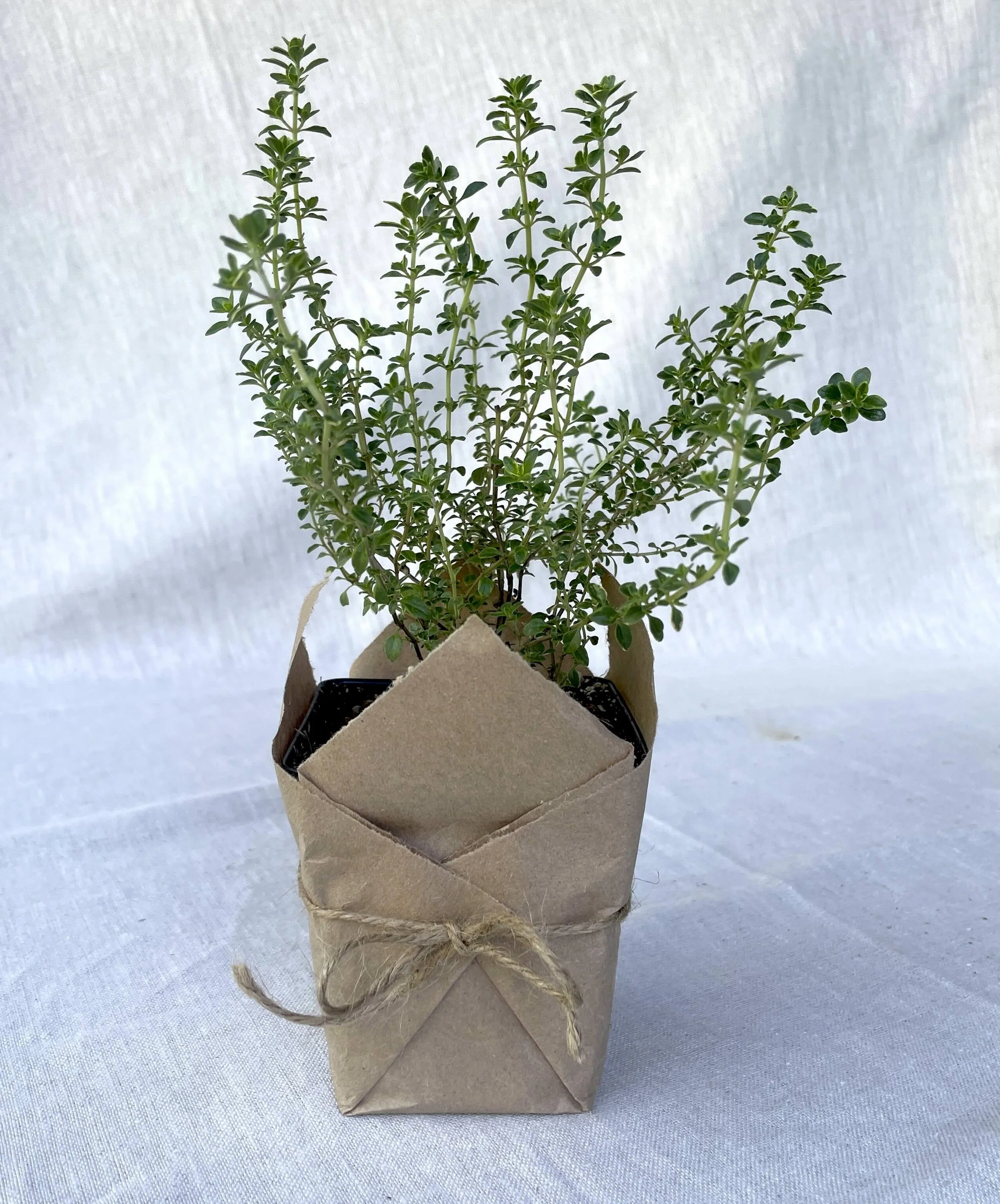
HOW THIS PLANT GROWS Lemon thyme grows as a low, spreading mound with small, glossy leaves variegated in shades of green and gold. It produces tiny pale pink flowers in summer that are edible and attractive to pollinators.
GROW JOYFULLY Lemon thyme is a workhorse that asks for almost nothing. Sunny spot, lean soil, and the occasional trim — and it will reward you with years of bright, fragrant harvests.