
Holy Basil (Tulsi)
BASICS FOR YOUR HOME
Kid-Friendly: Yes
Pet-Friendly: Yes (mildly; large quantities not recommended)
Indoors: Bright window; needs warmth
Container Outdoors: Yes
In-Ground: After last frost; warm soil essential
Light: Full Sun
Temperature: Above 55°F; highly frost-sensitive
Water: Moderate
CARE INSTRUCTIONS
LIGHT: Holy basil needs full sun and warmth. It thrives in conditions that feel almost too hot for other herbs. Indoors, the sunniest south-facing window is ideal, supplemented with a grow light if needed.
WATER: Water when the top inch of soil is dry. Holy basil prefers consistent moisture but will rot in waterlogged soil. Good drainage and air circulation are important for preventing fungal issues in humid environments.
SOIL & POT: Rich, well-draining potting mix works best. Holy basil is a vigorous grower and may benefit from occasional fertilizing during the growing season. Choose a pot with excellent drainage.
SEASONAL TIPS: Pinch flower spikes as they appear to prolong leaf harvest and maintain the plant’s energy. Holy basil grows quickly and benefits from regular, aggressive harvesting. It will not survive frost — bring cuttings indoors before temperatures drop.
HOW TO HARVEST
• Pinch stems just above a pair of leaves to encourage branching
• Harvest the top third of the plant consistently
• Remove flower spikes immediately to prolong the harvest season
• Leaves, flowers, and flower buds are all edible and aromatic
• Morning harvests after dew dries are most flavorful
HOW TO USE
Holy basil (tulsi) has a complex, spicy, clove-like flavor with peppery, slightly medicinal undertones — quite different from sweet Italian basil. It is sacred in Ayurvedic tradition and widely used in Southeast Asian cuisine.
Fresh
• Add to Thai curries, stir-fries, and noodle dishes (it is a key ingredient in Thai basil chicken — pad krapow)
• Tear into spicy salads or green papaya salad
• Add to Vietnamese pho as a fresh herb garnish
• Muddle into cocktails with ginger and lime
Tea / Adaptogenic Use
• Steep fresh or dried leaves in hot water for tulsi tea — warming and calming
• Blend with ginger, lemon, and honey for a traditional wellness tea
• Use in cold brew tea or iced herbal blends
Dried
• Dry leaves on a screen or in a dehydrator
• Blend into chai spice mixes
• Use in herbal wellness blends
Tips
• Holy basil is more heat-tolerant in cooking than sweet basil — it holds up slightly better when added earlier.
• The flavor is assertive — start with smaller quantities if unfamiliar.
• Pairs beautifully with ginger, garlic, chili, coconut, and citrus.
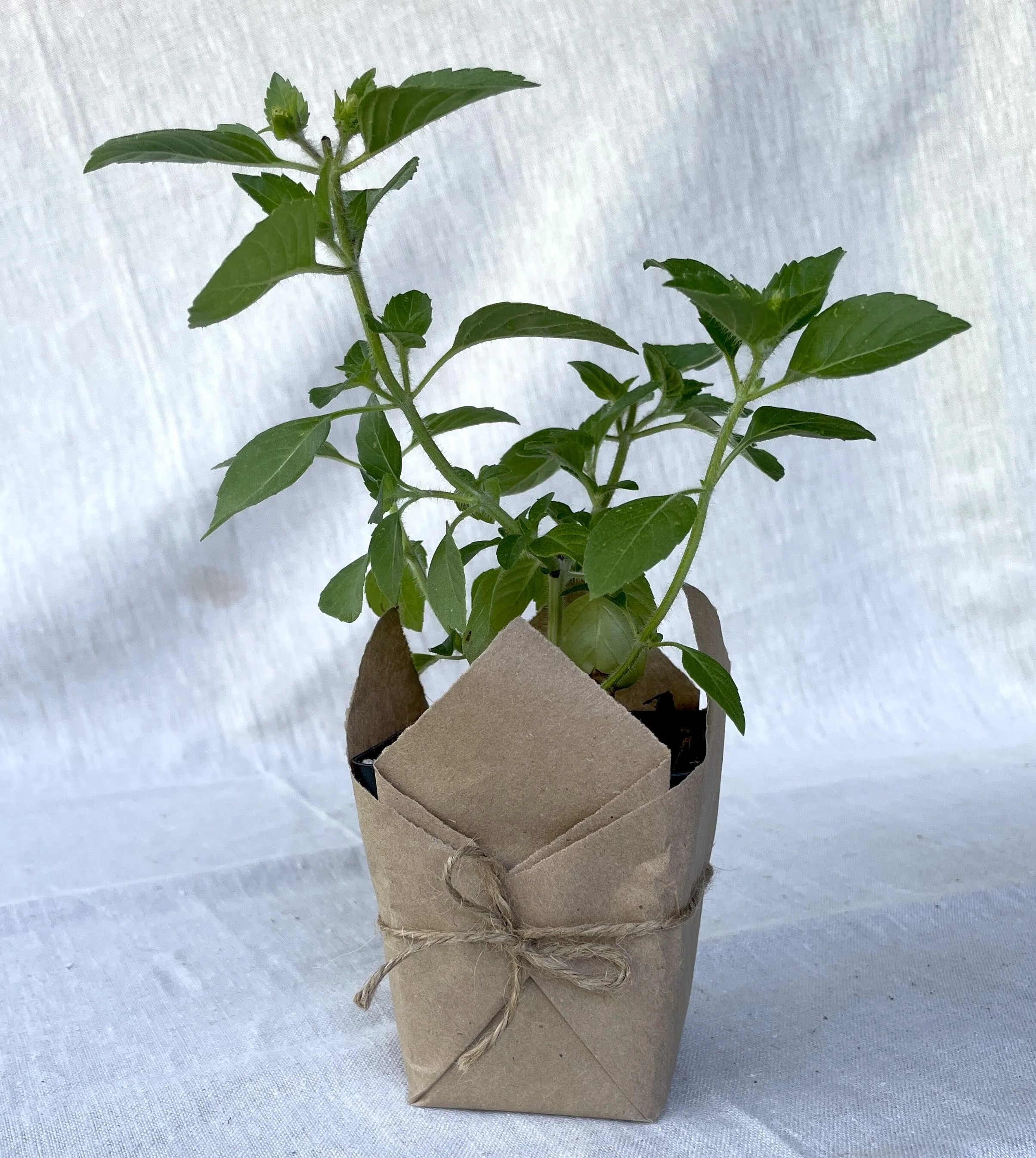
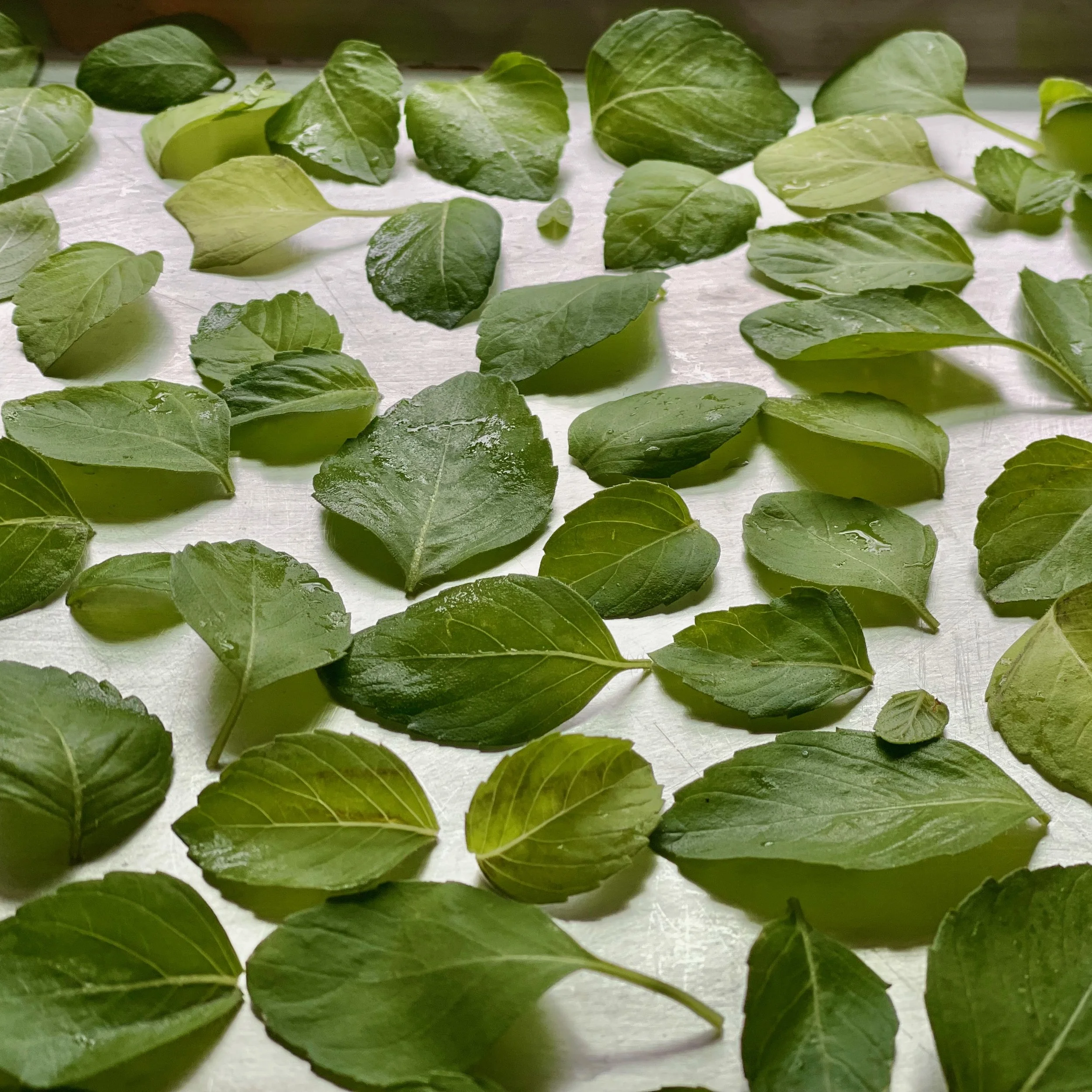
HOW THIS PLANT GROWS Holy basil grows upright with sturdy, branching stems and aromatic leaves that range from green to deep purple depending on the variety. It produces spikes of small lavender flowers with a distinctly spicy fragrance.
GROW JOYFULLY Tulsi is revered for a reason. It grows with vitality, fills the air with fragrance, and offers as much to the spirit as it does to the kitchen.